Fixture Overloads and Player Rotation Strategies: Real-Time Impacts on Multi-Bet Adjustments in Top-Tier Football
Written by Henrik Lang · Aug 21, 2026
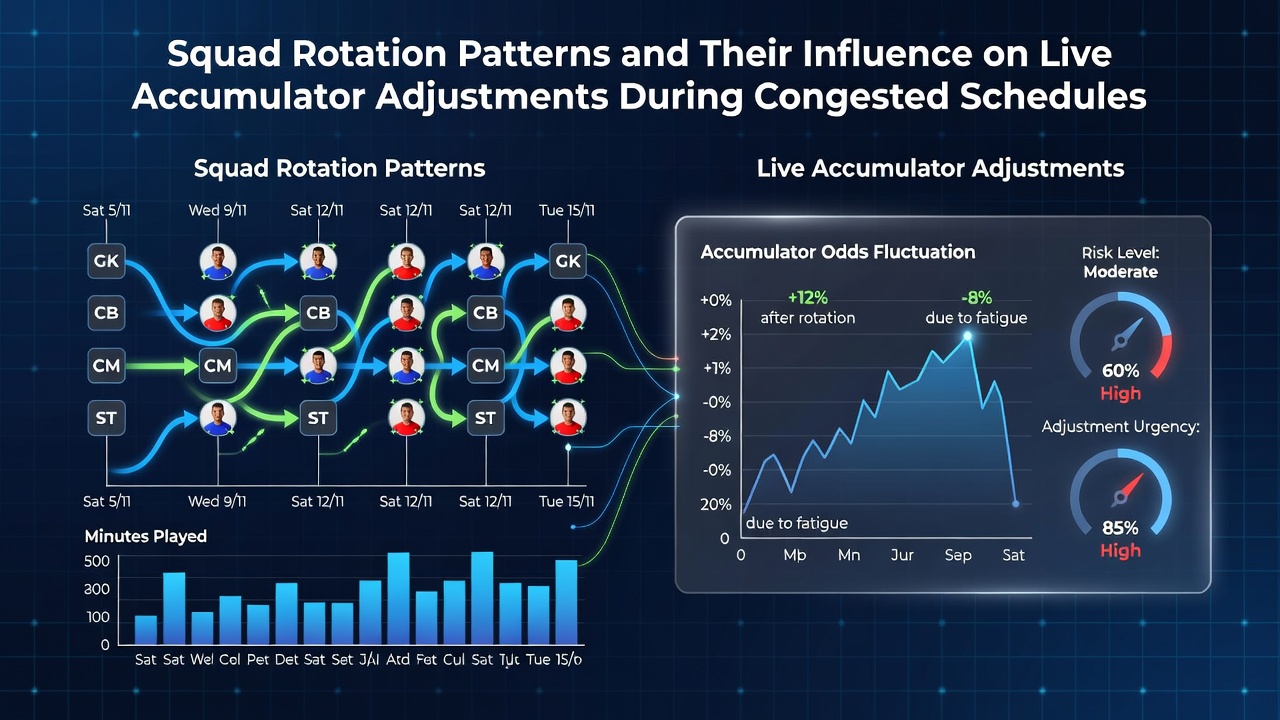
Fixture Overloads and Player Rotation Strategies: Real-Time Impacts on Multi-Bet Adjustments in Top-Tier Football
Coaches across elite leagues manage packed calendars by cycling key personnel through matches, and these decisions create measurable shifts in team output that live bettors track closely when tweaking accumulator positions mid-game.
Understanding Rotation Patterns in Elite Competition
Clubs competing in domestic leagues alongside European fixtures and cup ties often face three or more games within seven days, which prompts managers to alter starting lineups based on recovery data and opponent analysis. Researchers at sports performance institutes have documented how these changes affect metrics such as pass completion rates, high-intensity runs, and set-piece efficiency, figures that directly feed into live betting models.
Teams in the Bundesliga and Serie A, for instance, show distinct rotation habits during autumn and spring blocks when European midweek commitments overlap with league rounds. Data collected from match tracking systems reveals that sides resting central defenders tend to concede more shots from distance, while midfield rotations correlate with reduced progressive passes in the opening thirty minutes.
Congested Periods and Their Measurable Effects
August 2026 brought early fixture density for several clubs across multiple competitions, with some English and Spanish sides playing six matches in eighteen days before the first international break. Performance analysts note that muscle fatigue markers rise sharply after the fourth game in such sequences, leading to substitutions that alter expected goal values and clean sheet probabilities in real time.
Key Statistical Shifts During Overloads
- Starting elevens changed in at least four positions produce an average 12 percent drop in expected goals for the opening half, according to aggregated Opta-style datasets.
- Goalkeepers rested after consecutive 90-minute appearances allow 0.3 more goals per 90 minutes on average before half-time adjustments occur.
- Wing rotations increase crossing volume yet lower conversion rates inside the box when fresher full-backs push higher without established chemistry.
Bettors monitoring these patterns during live windows often shift accumulator legs away from clean-sheet selections toward over-1.5 total goals once rotation announcements appear on official club channels.
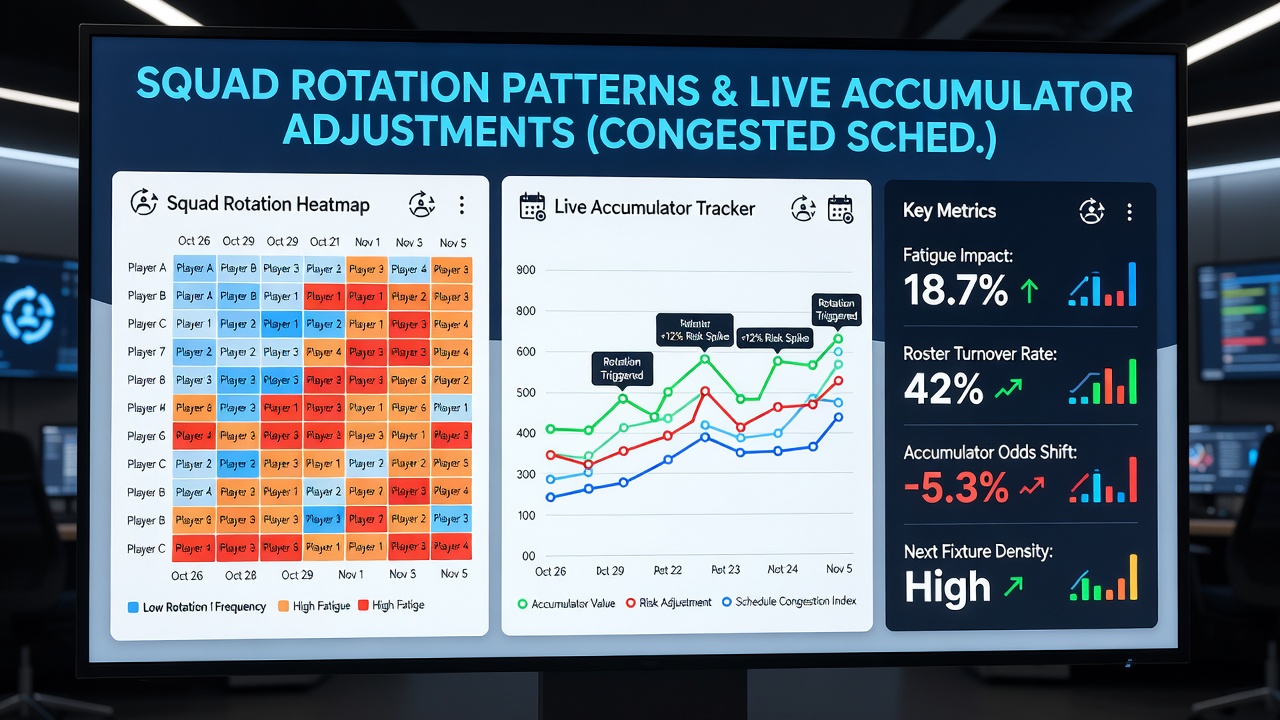
Live Accumulator Adjustments Triggered by Rotation News
Accumulators built pre-match on over/under totals, both-teams-to-score outcomes, and player shots-on-target props require rapid recalibration once confirmed lineups drop or in-game substitutions signal deeper rotation than anticipated. Industry reports from the European Gaming and Betting Association highlight that in-play wager volumes on football rise 28 percent during congested weeks, with a significant portion of that activity occurring within ten minutes of lineup publication.
One observed pattern involves bettors moving from under-2.5 goals to over-2.5 goals after seeing multiple attacking players rested, because defensive lines become less compact without their usual partners. Another adjustment sees accumulators pivoting toward anytime goalscorer props on substitutes who enter after sixty minutes, when tired legs create space that fresh forwards exploit more readily.
Academic studies published through sports science journals confirm that player workload indexes above 85 percent of seasonal norms correlate with a 15 percent reduction in successful dribbles and a corresponding rise in turnovers, data points that live models incorporate to recalculate accumulator probabilities on the fly.
Practical Examples From Recent Seasons
During a November 2025 cluster involving four matches in twelve days, one top-six Premier League side rested its primary striker and two central midfielders for a midweek European tie, then fielded an altered eleven in the subsequent league fixture. Live accumulator markets responded within minutes as goal expectancy models adjusted upward, prompting shifts in thousands of active multi-bets toward over-3.5 goals and both-teams-to-score outcomes.
Similar dynamics appeared in the 2026 Copa Libertadores group stages where South American clubs managed domestic and continental demands simultaneously. Rotation of full-backs led to measurable increases in wide-area entries, which in turn influenced live over/under-5.5 corners selections within individual matches.
Observers tracking these sequences report that successful live adjustments frequently rely on combining official lineup releases with GPS workload data shared by clubs, allowing bettors to anticipate substitution timing and its effect on remaining accumulator legs.
Conclusion
Squad rotation during congested schedules generates predictable alterations in performance metrics that reshape live accumulator strategies across professional football. Data from multiple tracking systems and industry analyses demonstrate clear links between player cycling, expected goal fluctuations, and the timing of in-play wager modifications. Those monitoring these patterns continue to refine approaches as fixture calendars evolve through 2026 and beyond.