Patterns of Travel Fatigue in Successive Away Matches Across Professional Football Leagues
Written by Avery Weber · Aug 23, 2026
Patterns of Travel Fatigue in Successive Away Matches Across Professional Football Leagues
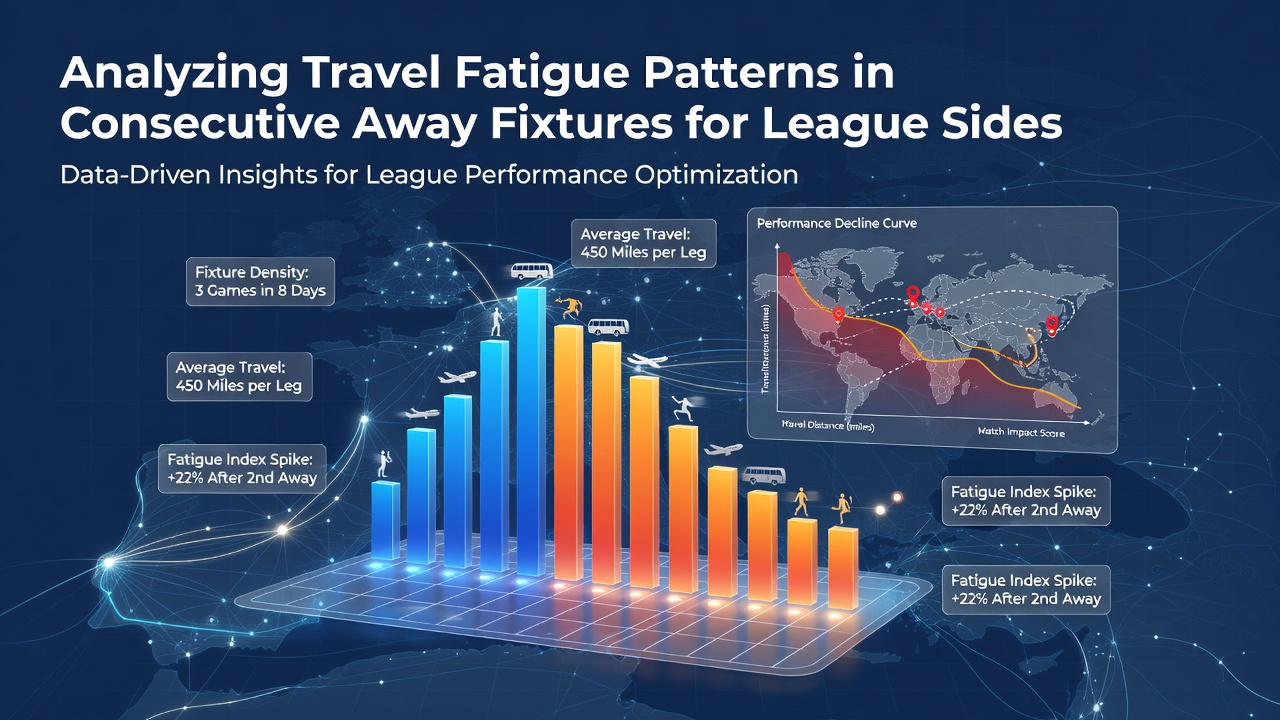
Professional football leagues schedule consecutive away fixtures that force teams to manage extended travel distances, time zone adjustments, and recovery periods between matches, and data collected from European and North American competitions shows measurable impacts on player metrics such as distance covered and sprint frequency. Researchers tracking performance in leagues like the English Championship and Major League Soccer have documented how back-to-back road games compound physical demands, particularly when journeys exceed 500 kilometers or involve overnight flights.
Key Factors Driving Fatigue Accumulation
Distance and mode of transport emerge as primary variables, with studies from the Australian Institute of Sport indicating that bus travel over several hours produces different recovery profiles compared with short-haul flights, while long-haul journeys disrupt sleep cycles more significantly. League schedules in August 2026 will again place clubs in situations where midweek European fixtures precede domestic away games, creating clusters of travel that overlap with training loads and match preparation routines.
Time zone shifts add another layer, since teams crossing multiple zones experience altered circadian rhythms that affect reaction times and decision-making on the pitch. Observers note that clubs based in northern England or Scotland often face longer domestic trips to southern venues, and data sets from the past five seasons reveal consistent patterns where recovery windows shorter than 72 hours correlate with elevated injury rates in subsequent fixtures.
Performance Metrics and League Data
Analyses of match statistics highlight reductions in high-intensity running when teams play away consecutively, and figures compiled by sports science departments at universities in Canada and Germany demonstrate that total distance covered drops by measurable percentages after the second away game in a row. Set-piece execution and passing accuracy also show variability, according to reports issued by UEFA's medical panels, which compile anonymized player monitoring data across continental competitions.
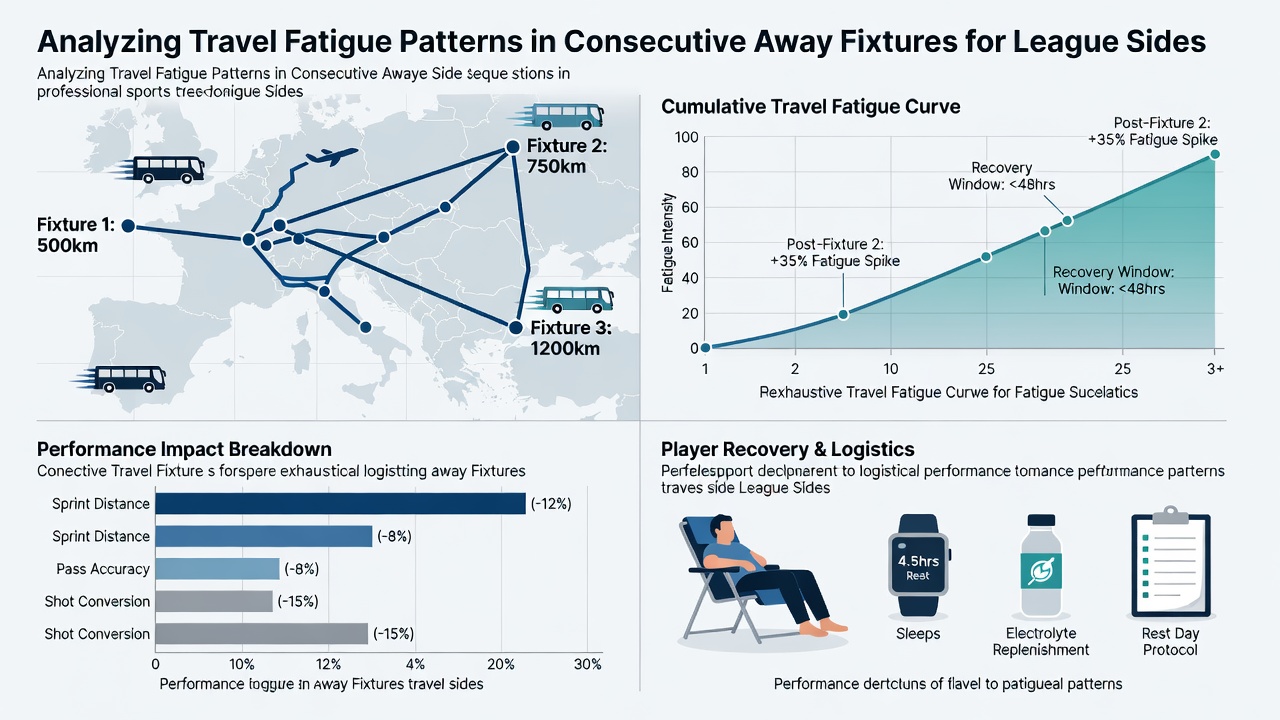
Coaching staffs respond with tailored recovery protocols that include adjusted training volumes, nutrition timing, and sleep hygiene measures, yet the effectiveness varies depending on squad depth and fixture congestion. One study published by a research group at the University of Queensland examined Australian A-League teams and found that those with access to chartered flights maintained more stable performance outputs than counterparts relying on commercial carriers or extended ground transport.
Comparative Approaches Across Regions
North American leagues such as MLS incorporate longer rest mandates after cross-country travel, whereas European domestic schedules often compress recovery windows because of television broadcasting demands and cup commitments. Data from the Japanese J-League, which spans a geographically dispersed island nation, provides additional context on how rail and ferry combinations influence fatigue differently from continental bus or air travel.
Monitoring technologies now allow clubs to track heart rate variability and neuromuscular readiness in real time, and organizations including FIFA have supported pilot programs that integrate wearable data into scheduling reviews. These initiatives aim to identify thresholds where cumulative travel stress elevates risk, particularly during the congested periods that mark the start of seasons like the one beginning in August 2026.
Conclusion
League authorities and club medical teams continue to refine scheduling frameworks and recovery strategies based on accumulated evidence from multiple continents, and the patterns emerging from consecutive away fixtures underscore the interplay between logistics, physiology, and performance outcomes. Ongoing research from academic and governing bodies supplies the quantitative foundation for these adjustments, ensuring that future calendars account for documented travel-related demands.