Tactical Timing: How Substitution Windows Shift Accumulator Edges in Midweek League Clashes
Written by Henrik Lang · Oct 15, 2026
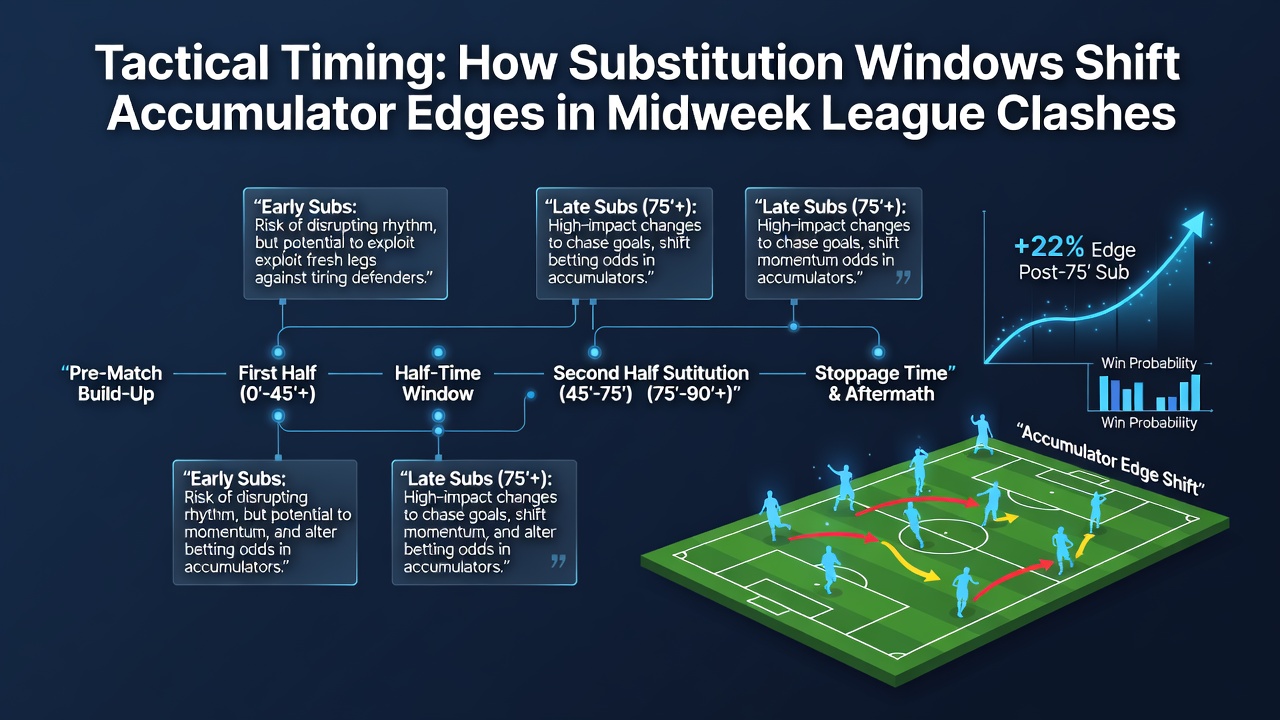
Tactical Timing: How Substitution Windows Shift Accumulator Edges in Midweek League Clashes
Midweek league fixtures create distinct patterns in match flow because squads rotate players more aggressively than they do on weekends, and substitution windows often open between the 55th and 75th minutes when fatigue sets in across both teams. Analysts tracking these intervals note that the timing of changes alters goal probabilities in ways that directly influence accumulator selections built around over 1.5 goals or both teams to score markets. Data collected across European domestic competitions shows clusters of decisive moments emerge shortly after these windows close, particularly when managers introduce attacking options against sides already stretched by congested schedules.
Substitution Windows and Their Measurable Effects
Coaches tend to make the first change around the hour mark in Tuesday and Wednesday fixtures because recovery periods between games shrink to just a few days, and fresh legs become essential for maintaining pressing intensity. Research from the International Centre for Sports Studies indicates that the probability of a goal in the subsequent 15-minute segment rises by an average of 12 percent when a team introduces a forward or attacking midfielder, while defensive substitutions correlate with a drop in expected goals conceded. These shifts matter for accumulators because bettors who factor the exact minute of the first change into their selections gain an edge over those who rely solely on pre-match lineups. Midweek schedules amplify the pattern because fixture congestion leaves limited time for full recovery, so managers plan rotations in advance rather than reacting solely to in-game events.
Accumulator Construction Around Tactical Adjustments
Builders of accumulators often combine multiple midweek matches into single bets, and the key variable becomes identifying which teams are likely to alter their structure at specific intervals. Observers note that sides trailing by one goal after 60 minutes increase their substitution rate by roughly 30 percent compared with teams leading, and the incoming players frequently contribute to late equalizers or winners. Figures from domestic league databases reveal that goals scored between the 70th and 85th minutes account for a higher share of total goals in midweek rounds than in weekend fixtures, a trend tied to the concentration of attacking substitutions during that span. Those constructing multis therefore monitor lineups released 75 minutes before kickoff and adjust selections once early changes appear on the bench. The approach requires cross-referencing historical substitution data for each manager rather than applying a uniform model across all teams.
Midweek Congestion and Player Rotation Patterns
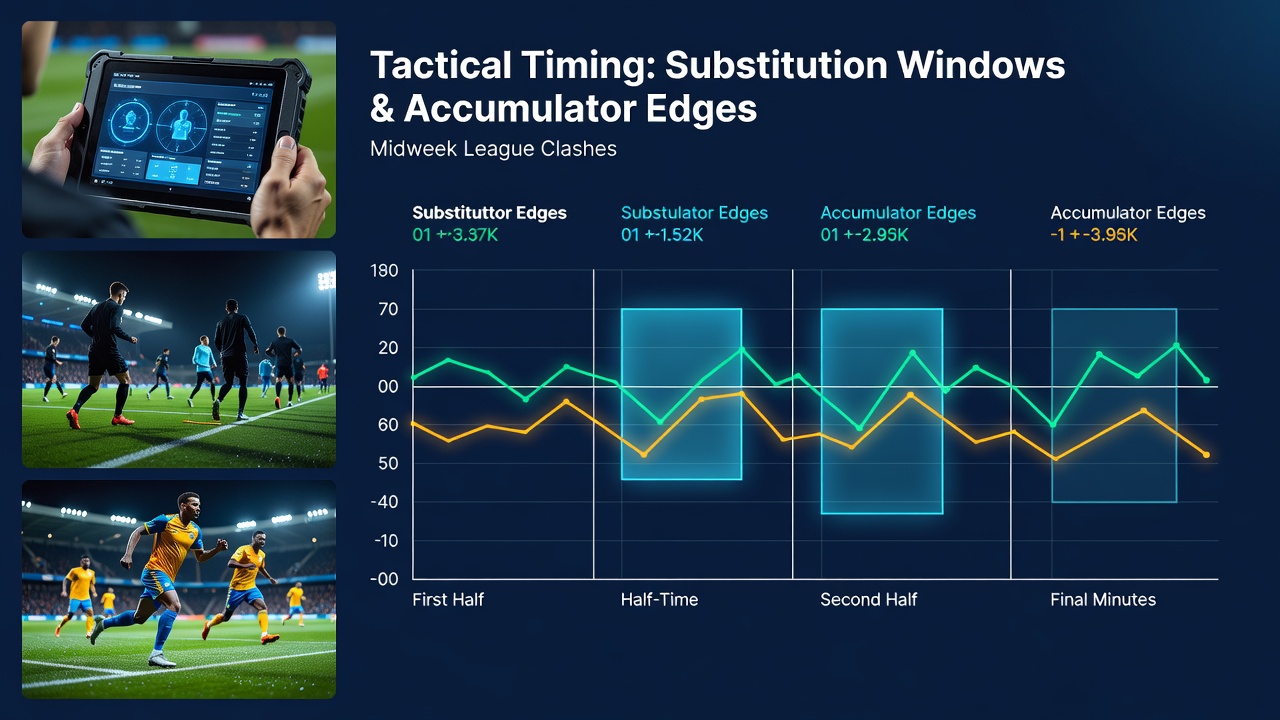
League calendars in October 2026 place several clubs under heavy fixture pressure because European commitments overlap with domestic cups, forcing managers to rotate entire units between matches. This rotation produces measurable differences in expected goal output once the first wave of substitutes enters, and data aggregators have recorded higher variance in match outcomes during these periods. Teams that preserve their starting attackers until the 65th minute tend to generate more shots in the final quarter, whereas clubs that make early defensive changes see their expected goals decline steadily after the 70th minute. Accumulator bettors who track these tendencies across multiple leagues can isolate fixtures where the timing of changes is most likely to produce late goals or clean sheets. The pattern holds across several competitions because the underlying cause remains consistent: limited recovery time between games compels tactical adjustments at predictable intervals.
Data Sources and Analytical Tools
Performance tracking platforms supply granular logs of every substitution and its immediate impact on key metrics such as shots, xG, and pass completion rates inside the final third. A study released by the University of Groningen's sports analytics group links the 60-to-75-minute window with elevated scoring rates in congested schedules, and the findings align with observations from multiple domestic leagues. Bettors integrate these datasets with real-time bench information to refine accumulator legs that depend on second-half goal tallies. The method involves filtering matches by the number of days since each team's previous fixture and then weighting the likelihood of attacking substitutions accordingly. Results from the past three seasons demonstrate that this filtering improves accuracy on over/under selections in midweek rounds compared with unadjusted models.
Conclusion
Substitution timing in midweek league matches follows repeatable patterns driven by fixture congestion and managerial preferences for rotation. Accumulator edges emerge when bettors incorporate the expected timing of those changes into their selections rather than treating all fixtures identically. Data from performance tracking systems and academic studies continue to highlight the 55-to-75-minute interval as a period of elevated variance, particularly when attacking reinforcements replace fatigued starters. Those who monitor these windows across multiple competitions gain access to structured information that supports more precise multi-leg constructions without relying on pre-match assumptions alone.