UK Gambling Trends Shift: Commission Data Highlights Betting Declines and Slots Growth to December 2025
UK Gambling Trends Shift: Commission Data Highlights Betting Declines and Slots Growth to December 2025

The Latest Snapshot from the Gambling Commission
Operators in the UK submitted fresh data to the Gambling Commission covering activity right through December 2025, and those figures, released in February 2026, paint a clear picture of a market in flux; real event betting saw sharp drops while slots bucked the trend with gains, all amid broader online shifts that observers in March 2026 continue to dissect for what they signal about player habits and operator strategies.
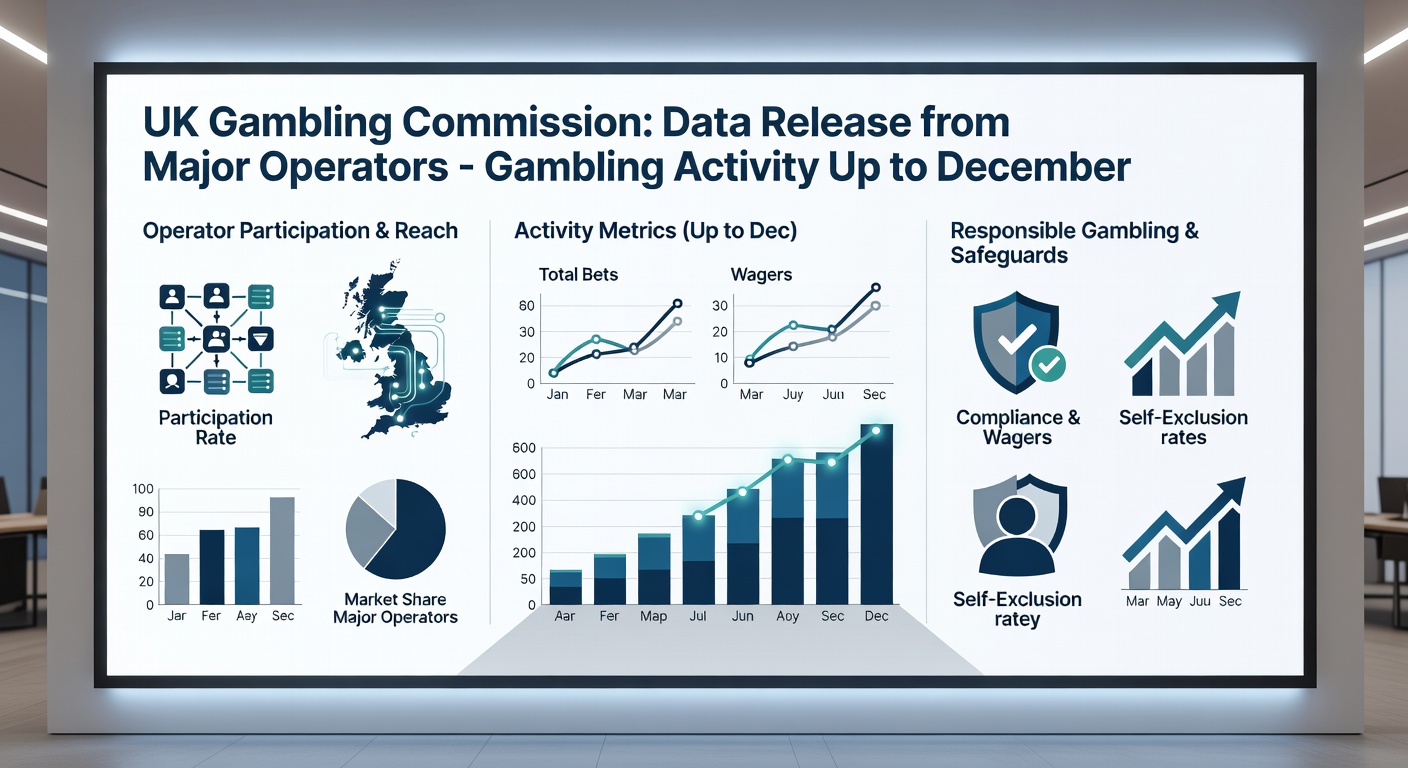
What's interesting here is how the numbers break down across channels, since Gross Gambling Yield—or GGY, which captures stakes minus winnings—offers a direct gauge of revenue performance; data shows real event betting online GGY plunged 18% year-on-year to £530 million, a stark contrast to the steadier, yet still declining, betting premises GGY that fell 7% to £549 million, while overall online GGY edged down just 2% to £1.5 billion, buoyed somewhat by other segments.
And then there's slots, where GGY climbed 10% to £788 million, highlighting how players gravitated toward those games even as traditional betting cooled off; experts who've pored over these stats note the divergence underscores evolving preferences, with online platforms adapting quickly to what keeps activity humming.
Diving into Real Event Betting: An 18% Online Plunge
Real event betting, think horse races, football matches, those core staples of the UK punter's world, took a hit online, dropping to £530 million in GGY from the prior year's levels—a full 18% decline that stands out in the dataset; premises-based betting fared better but still slipped 7% to £549 million, suggesting foot traffic held up somewhat while digital wagers thinned out.
But here's the thing: this split between online and physical venues reveals patterns in how people bet these days, since online convenience pulls crowds yet saw the steeper fall, whereas shops, despite their own dip, retained more resilience; data from major operators underscores that real event betting overall faces headwinds, whether from seasonal factors, economic pressures, or shifts toward other gambling forms—take one analyst who crunched the numbers and pointed out how football season peaks didn't fully offset the broader slide.
Figures like these prompt questions about sustainability, although the Commission stresses they come from licensed operators tracking behavior meticulously; in March 2026, as industry watchers review the report, the 18% online drop grabs headlines because it signals potential long-term changes in event-driven wagering.
Online GGY Holds Steady with a 2% Dip to £1.5 Billion
Zooming out to the bigger online picture, total GGY settled at £1.5 billion, down 2% from the year before, a modest contraction that masks the push-pull between declining real event bets and rising slots; operators reported this aggregate while navigating regulatory scrutiny, and the slight dip comes as no surprise given the real event segment's outsized drag.
Yet slots' 10% surge to £788 million softened the blow considerably, since that category's growth—fueled by popular titles and mobile access—offsets losses elsewhere; researchers examining the data observe how online diversification keeps the overall pot from boiling over into steeper declines, with players mixing bets across products more than ever.
One case in point emerges from the operator submissions, where slots not only grew but did so robustly, hitting £788 million while real event online GGY halved its pace in comparison; that's where the rubber meets the road for platforms relying on digital revenue streams, as these trends dictate where marketing dollars flow next.
Slots Surge 10% to £788 Million: The Bright Spot
Slots stand tall in this report, with GGY rising 10% year-on-year to £788 million, a gain that researchers attribute to their accessibility and variety; unlike event betting's reliance on schedules and outcomes, slots deliver instant play, drawing in sessions that stack up volume even as average stakes vary.
Data indicates this uptick happened across major operators, reflecting player demand for low-barrier entertainment; and while real event betting shed £95 million online alone (that 18% drop), slots added enough to keep online totals from freefall, turning what could have been a rout into a nuanced shift.
Observers note how this mirrors global patterns too, although UK specifics shine through here—take the contrast with premises betting's 7% fall to £549 million, where physical slots might play a role but can't match online scale; in March 2026, as the full market impact data sinks in, slots' momentum suggests they're the category to watch for future yields.
- Online real event GGY: -18% to £530m
- Premises betting GGY: -7% to £549m
- Overall online GGY: -2% to £1.5b
- Slots GGY: +10% to £788m
These bullets capture the essence, but the interconnections matter too; slots' rise doesn't just pad numbers—it influences how operators allocate resources, from game development to compliance efforts.
Broader Market Dynamics and Operator Insights
Major operators fed this data into the Commission's framework, covering behavior up to year-end 2025, and the resulting trends highlight a market adapting on the fly; real event betting's declines, particularly online, coincide with slots' ascent, suggesting players chase quicker thrills amid whatever curbs traditional punting—economic squeezes, perhaps, or competing entertainment.
So, premises hold a sliver more ground at £549 million despite the 7% slip, while online's £1.5 billion total weathers the storm thanks to diversified play; experts who've studied prior reports see this as continuation of a pivot, where slots' £788 million milestone underscores their pull in a regulated landscape.
That's not rocket science, yet it's noteworthy because these shifts inform policy tweaks and business plans alike; one study of similar data found operators leaning harder into slots tech, like progressive jackpots, to sustain yields, and this fresh batch reinforces that trajectory without inventing new narratives.
Now, as March 2026 unfolds, the Commission's release prompts deeper dives into session lengths, deposit patterns—all those layers beneath the top-line GGY; people in the know emphasize how accurate operator reporting makes this gold standard for tracking UK gambling's pulse.
Conclusion: Trends Point to a Evolving Landscape
The Gambling Commission's data to December 2025 lays bare a UK market where real event betting contracts—18% online, 7% in premises—yet slots expand by 10% to £788 million, stabilizing online GGY at a 2% dip to £1.5 billion; operators navigate these waters with eyes on compliance and innovation, while observers in March 2026 parse the figures for signals on player shifts and revenue paths ahead.
Turns out, the ball's in the industry's court to balance declines with growth pockets, and these stats provide the roadmap; data like this doesn't predict futures but equips stakeholders with hard truths, from £530 million online betting lows to slots' high-water mark, shaping strategies that keep the sector humming responsibly.
In the end, the report stands as a factual benchmark, one that those tracking gambling behavior will reference long after the initial buzz fades.